Pages

Sunday, March 13, 2016

Common pet emergencies and pet first aid tips


Choking

  • If your pet’s airway is totally blocked, you must take immediate action, as there is no time to go to the veterinarian for help.
  • Open the mouth and look for a foreign object. If the dog is unconscious and an object is blocking the airway, grab the tongue and pull it outward to try to dislodge the object.
  • Regardless of consciousness, sweep your finger through the dog's mouth in an effort to feel or dislodge any object. Use caution to avoid being bitten. CPR or the Heimlich maneuver may be required.

Seizures

  • Make sure your pet is in a safe place, but do not try to restrain her. She may be scared during a seizure and not recognize her owner, so keep your hands away from her mouth.
  • Seizures can occur for a variety of reasons. It is urgent that you take your pet to a veterinary hospital immediately.
 

Heatstroke

  • If your pet has been exposed to the heat and has a bright red tongue, red or pale gums, thick or sticky saliva, diarrhea, is panting rapidly, weak, depressed, dizzy, or vomiting, he may be suffering from heatstroke.
  • In the case of heatstroke, immediately remove the dog from heat and lower his temperature by wetting him thoroughly with cool or lukewarm water (NOT ice cold) and increase air movement with a fan. Then take him to the vet as soon as possible.
  • As the weather continues to heat up here in Austin, we’ll go more in depth about symptoms and prevention of heatstroke and other heat-induced emergencies. 
 

Poisoning

  • Signs of poisoning include bleeding, both internally and externally, dilated pupils, drooling or foaming at the mouth, seizures or abnormal behavior and mental state.
  • Some of the obvious culprits might be rat poison or cleaning products, which should be kept out of reach, but pets can also be poisoned by unassuming household items. 
 

Animal Bites 

  • Keep an eye out for one or more small puncture wounds, tremors, nausea, vomiting, weakness, difficulty breathing, bleeding and bruising at the site of the wound.
  • If you think your pet has been bitten by a snake, seek immediate medical attention.
  • Sometimes, injuries from being bitten by another animal seem minor; however, your pet should still see a vet to prevent infection and check for internal wounds.
  • If bleeding, apply gauze to the wound. Should the bleeding continue, apply new gauze without removing soaked gauze until you reach the veterinary hospital.
  . .  

OTHER PET EMERGENCY TIPS

  • Stay calm! Pets are keen. They can very easily sense when you are nervous, scared, or stressed and may mirror your emotions.
  • During an emergency, a relaxed, confident and educated guardian can help save an animal’s life.
  • Use your best judgement when deciding if it is something that can be handled at home or if you should call the vet.
  • Download a pet emergency app. 
  • Buy a pet first aid book. There are numerous resources available to educate pet parents on first aid plans. 
  • Take a pet first aid class. 
  • Create your own pet first aid kit.

Saturday, March 12, 2016

What constitutes as animal cruelty?

what constitutes as animal cruelty?


ASPCA NATIONAL SHELTER OUTREACH

Acts of violence or neglect perpetrated against animals are considered animal cruelty. Examples include overt animal abuse, dog and cock fighting and companion animal neglect where the animal is denied basic necessities of care such as fresh water and food or shelter.
What Constitutes Animal Cruelty?
Thinkstock
Many people who witness or hear about cruelty are not aware that legal action can be taken to help stop the problem. Companion animals are primarily covered by state animal cruelty laws, which vary from state to state and county to county. Animal welfare organizations across the country work daily to educate people about the proper care of animals and how to prevent animal cruelty.
Animal cruelty can be divided into two general categories: neglect and intentional cruelty.
Neglect
  • Neglect is the failure to provide an animal with the most basic of requirements of food, water, shelter and veterinary care.
  • Neglect may be due to ignorance on the animal owner’s part and is usually handled by requiring the owner to correct the situation. If the problem is not corrected, the animal may be removed from the neglectful person by law enforcement authorities.
Intentional Cruelty
  • Intentional cruelty is often more shocking than neglect and is frequently an indicator of a serious human behavior problem.
  • Intentional cruelty is when an individual purposely inflicts physical harm or injury on an animal. (The ASPCA and other organizations with cruelty investigation authority have arrested individuals who have deliberately maimed, tortured or even killed animals.)
  • Although many individuals are arrested for intentional cruelty, people who commit even the most heinous crimes against animals are often not prosecuted to the full extent of the law. In states where animal cruelty is considered a misdemeanor, individuals who commit intentional cruelty crimes against animals can receive, at most, one year in jail and a $1,000 fine. Often, perpetrators receive no more than probation.
  • Someone who is violent towards animals may be violent towards family members or others.
Animal Cruelty Laws (State-to-State)
  • 33 states and the District of Columbia currently have laws that make intentional cruelty a felony charge, while the remaining states treat animal cruelty as a misdemeanor.
  • Many animal cruelty laws specifically exclude accepted animal husbandry practices involving farm animals, animals used in research, and lawful hunting and trapping of wildlife.
  • Many states now require the person convicted of cruelty to undergo psychological evaluation and counseling, in addition to paying a fine or serving a prison sentence.
  • An increasing number of states are instituting cross training and reporting programs that involve social service workers who are likely to see cases of animal abuse during the course of their work in domestic violence and child abuse cases.
  • A number of states provide civil and criminal immunity to veterinarians who report suspected cases of animal abuse to law enforcement authorities, as veterinarians are likely to be the first to come in contact with an abused animal.
  • Enforcement of animal cruelty laws can be carried out by local police or by humane or municipal agencies that are granted power from the state or local government.
Advice from the ASPCA
  • If you witness or hear about animal cruelty taking place, report it to your local humane organization or call your local police.
  • Learn about animal-friendly legislation pending in your state – visit the ASPCA’s online Advocacy Center.
  • Become a member of the ASPCA Legislative Action Team and take an active part in passing legislation. E-mail all inquiries to government@aspca.org or call the Government Affairs & Public Policy department at 212-876-7700 ext. 4550.
  • Teaching future generations to respect animal life will make our society more humane. Make sure schools in your town include humane education as part of their curriculum. E-mail the ASPCA at education@aspca.org for classroom resources.
  • If you own a pet, be responsible and provide him with annual veterinary check-ups and preventative medical care; spay or neuter your cat or dog to reduce pet overpopulation and urge your friends to do the same.
  • Support your local animal rescue organization or shelter with donations of money, food or supplies. Volunteering your time or fostering a shelter animal is a good way to make a difference. Fostering helps socialize abused or frightened animals before they are adopted.
Courtesy of
ASPCA
424 East 92nd St.
New York, NY 10128-6804
(212) 876-7700
www.aspca.org
Contact: Media Relations (212) 876-7700 ext. 4655

Sunday, February 21, 2016

Military and Going on Deployment? Dogs on Deployment can help.

If you are a military member who needs to find a place for your pet to stay temporarily while your away on deployment, Dogs on Deployment maybe just the place you should check out :) Always consider temporary care instead of getting rid of your pet when there are resources that will help you.

Dogs on Deployment Information:

Mission

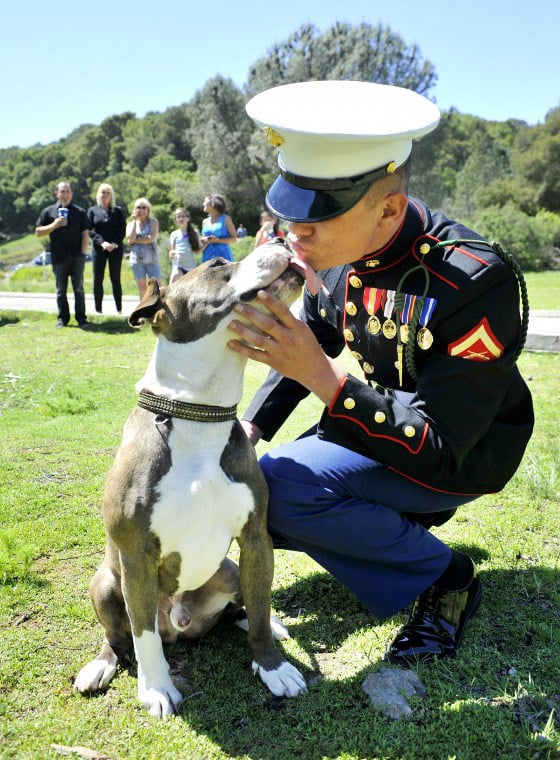
LCpl Jon Contreas reunited with his dog Diego, after an Afghanistan deployment.
Our mission is to give military members peace of mind concerning their pets during their service commitments by providing them with the ability to find people and resources able to help them.
Dogs on Deployment is a national 501(c)(3) non-profit providing a central network for military members to find volunteers willing to board their pets while they are deployed or have other service commitments, making them unable to temporarily care for their pets. No pet should ever be surrendered to a shelter due to a military commitment. DoD exists to help military members keep their pets by alleviating the need for pet relinquishment from military members due to the hardships of deployments.
Additionally, Dogs on Deployment promotes responsible, life-long pet ownership in the military community by:
  • Advocating for military pet owner rights on military installations
  • Providing educational resources for military members about responsible pet ownership
  • Granting financial assistance to military members for help with their pet's care during emergencies
  • Promoting healthy pet lifestyles, including spay and neuter, insurance options and vaccinations
  • Connecting with community organizations to ensure Dogs on Deployment resources are available to military families
Dogs on Deployment aids pets of all types that belong to active duty, reservists, guard, honorably discharged veterans and their families.

Our Goals

  • DoD aims at having DoD Boarders located near all major military bases in the United States. A military member should be able to find a DoD Boarder located within 50 miles, no matter what base they are stationed at or deploying from.
  • DoD will become a first resource for military members to turn to when they need long term boarding for their pets. This includes, but is not limited to, being recommended by military assistance organizations, base family support centers and animal shelters impacted by relinquished pets.
  • DoD plans to increase the rights and education that pet owners have while serving active duty in the military. This includes bringing light to the problem of pet relinquishment by military members to higher levels of the chain of command, and petitioning for annual, military-wide pet responsibility training. We want pets to be considered part of the family by military regulations, not disposable objects.
  • DoD will help promote the military-pet community by providing a database of partnered pet related businesses which support their troops through discount and incentive programs. Users will be able to search for local businesses which will provide them with affordable options for pet care.
  • DoD wants to help qualified military members with the cost of pet care during emergencies, and/or before and during deployments in order to promote responsible pet-ownership, providing financial assistance to get military pets spayed/neutered, vaccinated, microchipped and help with cost of pet care. This is known as our Pet Chit Program.
  • Dogs On Deployment

Sunday, February 7, 2016

When to go to a veterinarian or just ask the internet crowd?

If you have health concerns for your pet always go to a veterinarian and get advice! Asking random strangers on the internet about your pet's health is irresponsible and not recommended. People have their own opinions or personal experience pertaining to their specific pet situation which does not necessarily apply to what is going on with your pet. Second opinions are always nice but if you must just ask another veterinarian.

This goes for home remedies as well. I get it veterinarian care can get expensive but why risk your pet's health? If you are low-income there are always programs that can help you be it pet rescues or sliding-scale veterinarians just look and call around. Pet insurance is always a option as well but make sure you do your research. 

In the end if you just can't afford veterinary care or refuse to at least seek out help paying for your pet's vet care or barely getting by just to support you or your family do yourself a favor and do not own a pet.

Wednesday, December 30, 2015

How to Find a Qualified and Professional Pet Sitter

Going on vacation and cannot take your pet? Well then you need a pet sitter :) Here are some tips to finding a qualified and professional pet sitter to provide proper care to your loving pet(s).

Find a Good Pet Sitter
Ask your veterinarian for a recommendation. A decent pet sitter should obviously have a extended support network such as a veterinarian in case there is a emergency, A pet sitter who has a established professional relationships with a veterinarian, a groomer, a trainer, a boarding facility etc. will at least give you the peace of mind should there be a medical or behavioral emergency or if there is need for a backup housing plan.
Recommendations and word of mouth. If your fellow family, friends and pet lovers have high recommendations for a particular person they have had a good experience caring for their pets definitely check into those sort of people. Always ask for references! The more the better off your precious pet.
Question if they have liability insurance and are bonded in case of accidents or negligence. Question how many years experience they have and how much knowledge they have concerning your particular pet. If you have a older pet or special needs pet ask about knowledge and experience caring for you pet's particular needs.
Go for a certified pet sitter. If a person has certifications from The National Association of Professional Pet Sitters (NAPPS) or Petsitters International (PSI) you will have peace of mind that these agencies are dedicated to training and certifying pet sitters thus the person in question is may also be dedicated to the well being of your pet.
Always have a contract and double check that contract. Make sure all that was discussed and agreed upon services are included in the contract. Document your pets needs and personality (daily maintenance/feeding schedules, medications, how your pet reacts to new people and other animals, etc.)
Do a try-out to see how the pet sitter interacts with your pet as well as a home check if your pet will be at the pet sitters premises. Make sure your pet gets along with the pet sitter and vice versa.
Ask about emergency plans. What will your pet sitter in case of emergency? Include a wide range or scenarios i.e weather, fire, medical emergency, your pet gets our the yard/off leash, your pet bites/injures another animal or person, etc,
Best level of service. Is your pet low-maintenance or high-maintenance?How much experience, certifications and recommendations do you require of a pet sitter for the absolute best possible care for your beloved pet? Ask yourself these questions and do your research to get your pet the best quality of care while your away :)